
Cost
Concrete Patio Cost in Kenosha County
Two decisions set your total: how big, and how fancy. Here is the published table for the first, the multiplier for the second, and what southeast Wisconsin adds underneath both.
A patio quote is not really a mystery. It is an area multiplied by a rate, plus the things a photograph never shows. Most of the confusion comes from cost guides publishing one wide range instead of letting you find the row that matches your yard.
Find your dimension
HomeGuide publishes patio cost against actual sizes. The pairs below are their figures, plain concrete first, stained or stamped second:
- 10 by 10 (100 sq ft) - $400 to $1,200 plain, $800 to $3,000 decorative
- 12 by 12 (144 sq ft) - $600 to $1,700 plain, $1,150 to $4,300 decorative
- 10 by 20 (200 sq ft) - $800 to $2,400 plain, $1,600 to $6,000 decorative
- 15 by 15 (225 sq ft) - $900 to $2,700 plain, $1,800 to $6,800 decorative
- 20 by 20 (400 sq ft) - $1,600 to $4,800 plain, $3,200 to $12,000 decorative
- 24 by 24 (576 sq ft) - $2,300 to $6,900 plain, $4,600 to $17,300 decorative
Two things jump out of that table. The decorative column runs to roughly double the plain one at every size. And the spread inside a single row is enormous, which is the part worth explaining.
Why one row spans a factor of three
A twelve by twelve does not cost between $600 and $1,700 because contractors disagree about profit. It varies that much because a national table averages a slab dropped on flat, drained, warm-climate ground together with one built to survive winters like ours.
Locally you are always at the expensive end of the preparation question, and for good reason. The surface has to tolerate water freezing inside it, which means air deliberately mixed into the concrete so that expansion has somewhere to go. It needs stone beneath it, compacted in layers rather than dumped and raked, because ground that lifts in February finds every shortcut taken in August. And it wants its joints designed before the pour instead of cut wherever seemed sensible afterwards.
None of that is visible on the finished patio. It is the entire difference between the bottom of that range and the top.
The finish multiplier
The same source breaks the surface treatment out separately, and this is the lever most people are actually deciding on:
- Plain or smooth trowel finish - $4 to $12 a square foot
- Broom finish - $6 to $13
- Exposed aggregate - $7 to $18
- Stained - $8 to $25
- Stamped - $9 to $30
Our honest recommendation for most yards is the broom finish. It grips when wet, it asks nothing of you afterwards, and it does not age in a way that looks like failure. Exposed aggregate is the value pick if you want visual interest without signing up for maintenance, because there is no colour in it to fade.
Stamped work earns its money where the patio is meant to be looked at and that look is what you are after. Understand the bargain first: colour and sheen sit in a sealer, that sealer wears down, and topping it up becomes one of the standing jobs of owning the house. Choose it on appearance alone. Anyone presenting it as the tougher option has it backwards.
Get a real number for your patio
Four quick questions and a local concrete contractor will be in touch to set up a free on-site estimate. "Just pricing it out" is a perfectly good answer.
What moves you within your row
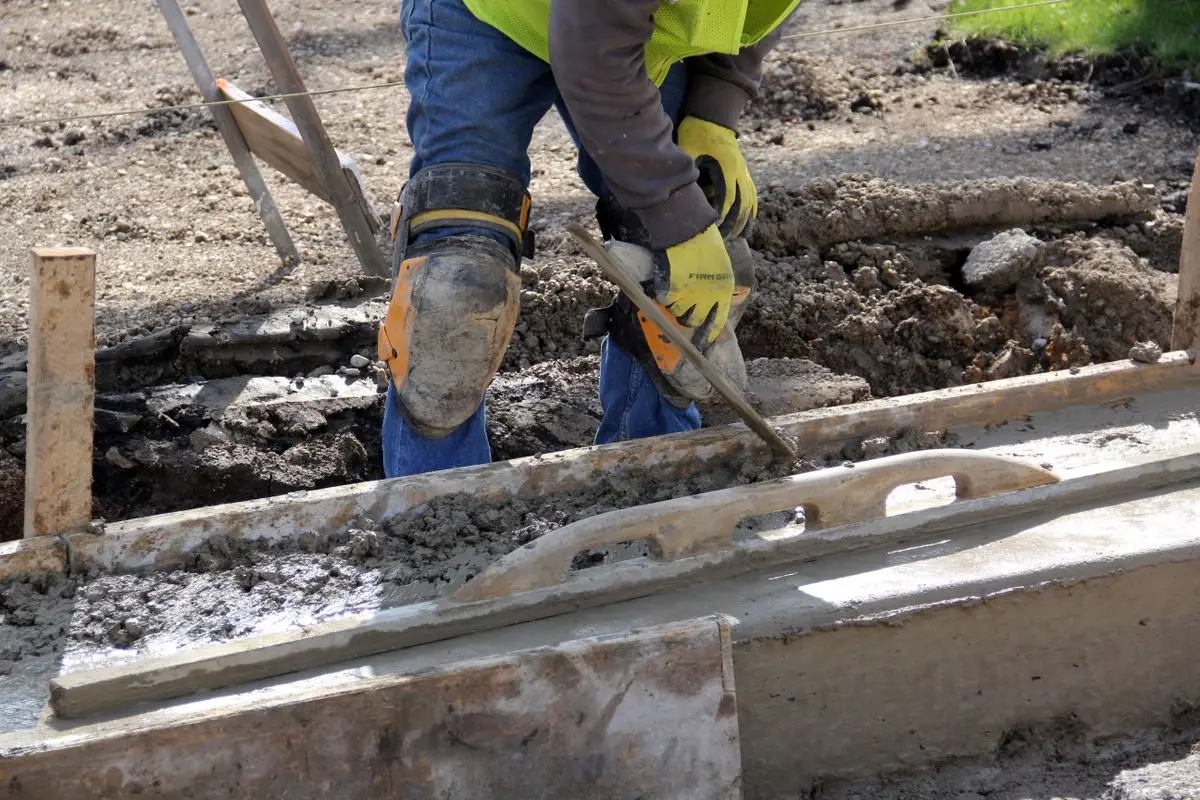
Whether something has to come out first. An old patio or a deck means demolition, loading and disposal charged on weight, all before your new surface begins.
How far the concrete has to travel on site. A truck that can discharge close to the forms is cheap to work with. A back garden reached through a gate, or up a grade, means every yard moves by barrow or pump, and that is hours of labour.
Size, in your favour. Fixed costs do not scale. The larger pours in the table above buy a better rate per foot than the small ones, which is worth knowing if you are wavering between a fifteen by fifteen and a twenty by twenty.
What gets ordered from the plant. Entrained air in the region of four to seven percent by volume is what carries a surface through repeated freezing. A patio that will see salt tracked onto it is a harder case again and should be specified that way.
Worth asking every contractor who bids
- Which size and finish combination is this price actually for?
- What depth of stone goes underneath, and how many compaction passes?
- What air content are you ordering from the plant?
- Where will the control joints fall, and who decides that?
- If it is stamped, which sealer, and how often will it need redoing?
Footings belong to buildings, not patios
The state requires footings to reach 48 inches down, and if frost in a given winter drives past that mark then the frost line becomes the governing figure instead. People repeating the number online tend to keep the first half and lose the second. Either half only matters for something holding a building up.
A patio is not a structure. Cast straight onto grade, it travels with the soil beneath it, which is why the things that keep it flat are clean stone and a thought-through joint plan rather than piers sunk below frost. Deep footings inside a plain patio quote deserve the question: what exactly is bearing on them?
Your first winter, and the advice to ignore
Put nothing on it during the opening season. A patio this young is saturated and still some way short of the maturity that would let it freeze without harm, while every deicing product on the shelf works by holding meltwater at the surface and running it through extra freeze cycles.
This is the point where widely repeated advice fails. Oregon's transportation department tested chloride deicers for how much compressive strength each one cost the concrete, and magnesium chloride came out the most destructive of those examined. It is also the product most often suggested as the safe substitute. The Wisconsin ready mixed association puts it alongside calcium chloride on the keep-away list. Plain sand gives you footing and costs the surface nothing.
Hold off sealing for a month while it dries, then look at it again every few seasons.
With a budget band settled, our concrete patio page walks through the job end to end, from pegging the outline on your grass to the surface you finish up standing on.
Sources
- HomeGuide - patio cost by size and by finish type. Figures verified 2026-08-18.
- Wis. Admin. Code SPS 321.16 - footing depth, and the deeper-of-the-two rule.
- Wisconsin Ready Mixed Concrete Association - flatwork care and deicer exclusions.
- Oregon DOT SPR 742 - chloride deicers measured against compressive strength.
- NRMCA CIP 2 - scaling, deicers and the freeze-thaw mechanism.