
Cost
Concrete Driveway Cost in Pleasant Prairie
The published rate depends mostly on thickness. The part nearest the street depends on the Village, which has more to say about your driveway than most homeowners expect.
There are two documents behind a driveway quote in this Village. One is a national cost guide. The other is Chapter 305 of the municipal code, and it is the one that catches people out. Both assume you have already chosen concrete; how the two surfaces really compare over twenty years is the question to close before either document matters.
What the guides publish, by thickness
HomeGuide splits driveway pricing on depth rather than on finish:
- Four inch standard - $6 to $15 per square foot
- Six inch, which they recommend for heavy vehicles - $8 to $20 per square foot
They further separate plain grey work at $6 to $10 from basic decorative at $10 to $15, mid-range stamped and multi-colour at $15 to $20, and high-end work from $20 to $25 and up. Permits they put at $50 to $200 generally.
Those are their national figures. The thickness line is the one to hold on to, because it is the decision with the longest consequences.
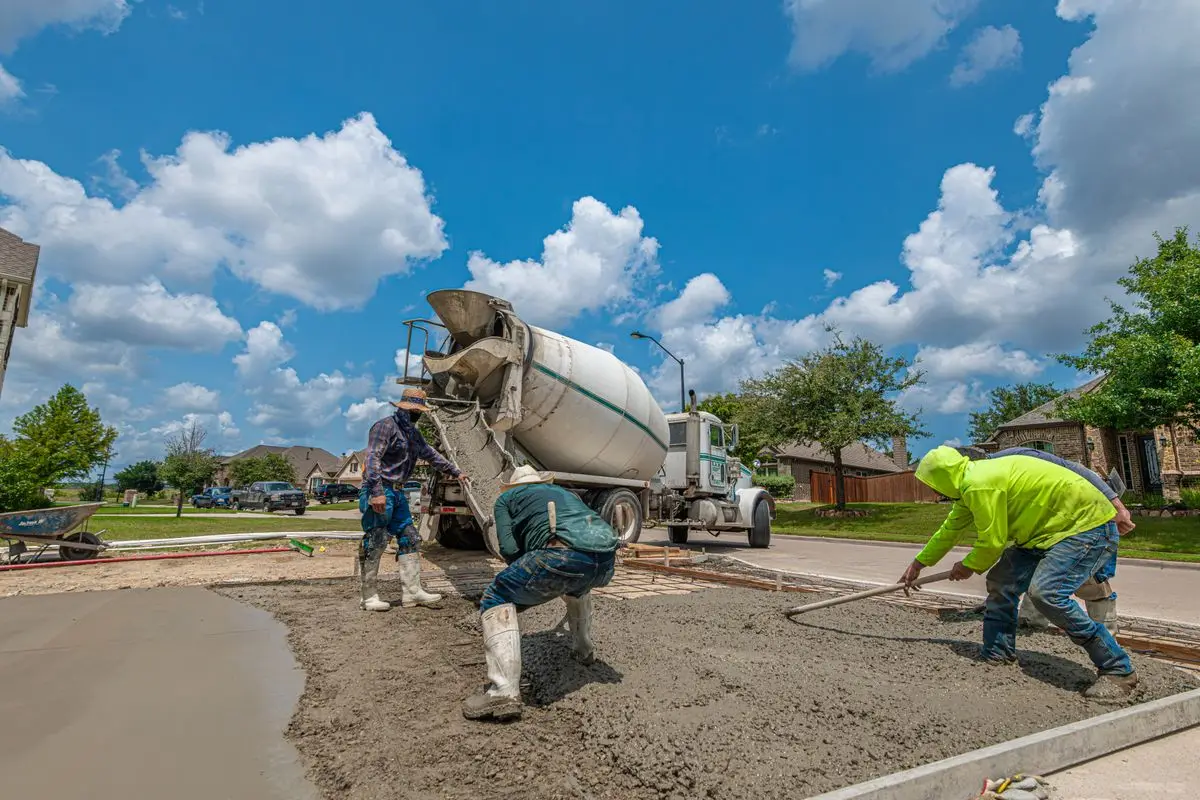
Four inches or six, decided properly
Four inches is right for cars and light trucks, which is most driveways. Six inches earns its premium the moment something heavy parks regularly: a motorhome, a loaded trailer, a work truck, a boat on a tandem axle.
The failure mode when this is called wrong is not subtle. A four inch slab under repeated heavy point loads cracks through rather than surface-crazing, and once it has broken across its depth there is no repair that restores it. Paying the thickness premium is materially cheaper than replacing a driveway two winters early, and this is the one place we would push a homeowner to spend up.
Five things the Village decides for you
This is where a local page earns its keep, because none of the following appears in a national average and all of it is binding here.
1. The permit, and the multiplier for skipping it
Work on sidewalks and driveway approaches requires a permit, and the ordinance spells out the consequence of starting first: the charge becomes five times whatever the Village Board has resolved it should be. Read that carefully. Nothing is added alongside the fee. The fee itself is what gets multiplied, and the trigger is work beginning ahead of issuance.
2. Who is allowed to do the work
Anyone in the business of constructing, modifying, removing or repairing driveway approaches has to be licensed, insured, and carry a $10,000 surety bond with the Village guaranteeing the work meets the ordinance. A permit is issued only to someone holding all three. Worth asking a bidder about directly.
3. How wide it can be
Between the street edge and your property line the driveway must measure at least 12 feet and no more than 24, with a maximum three foot radius where it meets the pavement. It also cannot swing into the right-of-way past the extension of your side property line without the Director of Public Works signing off.
4. Whether your street is rural or urban profile
On urban profile streets a concrete driveway may be built within the right-of-way. On rural profile streets the concrete has to stop no closer than four feet from the road edge. That is a real design constraint, and if you live on a rural profile road and a bidder has drawn concrete to the pavement, they have not read the ordinance.
5. Who installs a culvert
Not your contractor. Culvert installations are performed by Village Public Works, with the owner applying through Community Development and paying actual cost. A quote that includes installing one is quoting somebody else's work.
Get a real number for your driveway
Four quick questions and a local concrete contractor will be in touch to set up a free on-site estimate. No obligation, and "just pricing it out" is a perfectly good answer.
The rest of what moves your price
Ground preparation. Excavated, filled with granular material, compacted in layers rather than in one lift. Driveways in this county fail from underneath far more often than they fail from the mix, and February finds every shortcut.
Access for the truck. Discharging straight into the forms keeps a pour short and cheap. Anything that forces the concrete to travel by barrow or pump is charged in hours.
Air content. A driveway takes salt every winter, which is the hardest duty residential concrete has here. Ask which specification is being ordered rather than assuming.
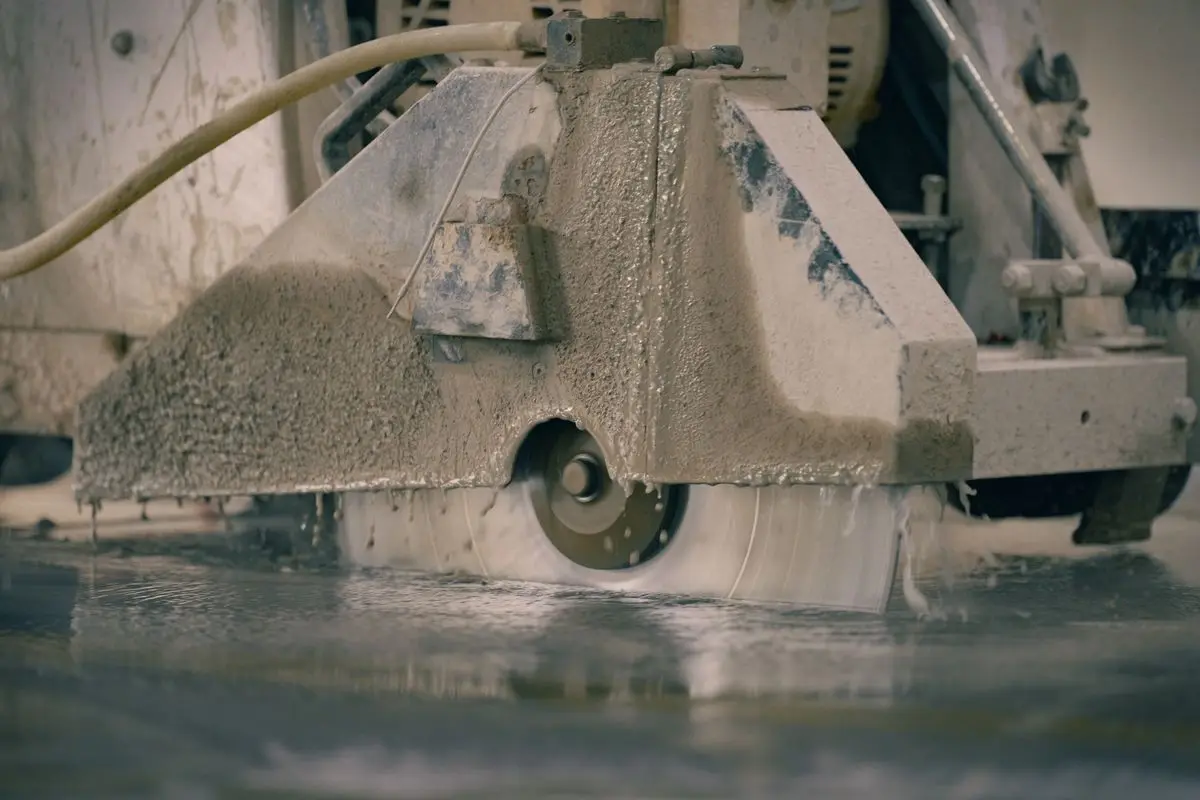
Joint layout. Cuts go in at roughly twenty-four to thirty-six times the slab thickness, a quarter of the depth deep, and they are planned before the truck arrives. Concrete cracks; joints are how you choose where.
Five questions that make bids comparable
- Is this priced at four inches or six, and which do you recommend for what parks here?
- Are you licensed and bonded with the Village, and who applies for the permit?
- Is my street rural or urban profile, and how does that change the design?
- What air content are you ordering for a surface that gets salted?
- Is removal of the existing surface inside this price or outside it?
Aftercare that pays for itself
Every fresh slab on the property gets treated this way, the drive included. That takes in a patio and a shed or garage floor alike, and the other Insights pages defer to what is written here.
Seven days with nothing parked on it. After that, no chemical products whatsoever until it has cleared a full winter, since a slab this new is damp through its depth and short of the strength needed to survive freezing in that condition, and deicers aggravate each of those at the same time.
That familiar tip about substituting magnesium or calcium chloride for rock salt will not stand up. The Wisconsin ready mixed association counts both among products to keep off concrete, and an Oregon DOT study measuring chlorides for strength loss placed magnesium at the very bottom. Use sand for grip. Sealing can wait a month and then recur every couple of years.
One case where you do not need us
If the concrete itself is sound and a section has simply settled or a joint has stepped, having the slab lifted back to level is cheaper and better than replacing it. That is specialist work with specialist equipment and it is not what we do, so if that describes your driveway you should go and find someone who does it rather than let anyone demolish a serviceable slab. The line is condition: lifting repositions concrete, it does not repair it, so once a slab has broken up you are only relocating the problem.
When the question turns from the number to the job itself, our concrete driveway page sets out what we build, who files the village paperwork, and how a site visit gets booked.
Sources
- HomeGuide - driveway cost by thickness and by quality tier, and typical permit fees. Verified 2026-08-18.
- Village of Pleasant Prairie Code, Ch. 305 Art. II - licensing, the $10,000 surety bond, insurance, permit requirement and the five times fee for work commenced before issuance.
- Village of Pleasant Prairie Code, Ch. 305 Art. I - driveway width between street edge and property line, rural and urban profile rules, and driveway culvert permits.
- Wisconsin Ready Mixed Concrete Association - driveway curing, traffic and deicer guidance.
- Oregon DOT SPR 742 - comparative chloride deicer strength loss.